Oops!
Weapons Given to Iraq Are Missing
GAO Estimates 30% of Arms Are Unaccounted For
By Glenn Kessler, Washington Post
The Pentagon has lost track of about 190,000 AK-47 assault rifles and pistols given to Iraqi security forces in 2004 and 2005, according to a new government report, raising fears that some of those weapons have fallen into the hands of insurgents fighting U.S. forces in Iraq.
Tuesday, August 07, 2007

Monday, July 02, 2007
Bring 'Em On Anniversary


Bush Sets Libby Free,
Celebrates 4 Years of Success in Iraq
July 2, 2007
Days before Vice President Cheney's former chief of staff, I. Lewis Libby, was to begin serving a two and a half year jail term, President Bush took the only possible action open to a Republican law-and-order hypocrite. He set him free. Libby's only crime, after all, had been lying under oath to protect his boss from any involvement in leaking the name of CIA agent Valerie Plame to the press.
Perjury is not as heinous a crime now as it was in 1998, when the GOP majority in Congress impeached President Clinton for lying under oath.
Bush's ignoble action comes one day before he quietly marks one of his more macho moments: urging Iraqis opposed to the U.S. occupation of their country to just try to attack U.S. soldiers.
July 3, 2003
WASHINGTON (CNN) -- Challenging militants who attack U.S. forces in Iraq, President Bush said Wednesday they would be dealt with harshly, and declared, "Bring 'em on."
For the second day in a row, Bush vowed that attacks on U.S. troops in Iraq will not shake his administration's resolve to stay in that country until a strong and stable democratic government takes root.
"Anybody who wants to harm American troops will be found and brought to justice," Bush said. "There are some that feel like if they attack us that we may decide to leave prematurely. They don't understand what they are talking about if that is the case. Let me finish. There are some who feel like the conditions are such that they can attack us there. My answer is, bring 'em on."
When Bush made his Bring 'Em On taunt, 254 U.S. soldiers had died in Iraq.
On the fourth anniversary of his unfortunate remark, the U.S. death toll was 3,584.
Tuesday, June 26, 2007
Fly Osama

Osama bin Laden May Have Chartered Saudi Flight Out of U.S. after 9/11
Washington, D.C.-- Judicial Watch, the public interest group that investigates and prosecutes government corruption, today released new documents from the Federal Bureau of Investigation (“FBI”) related to the “expeditious departure” of Saudi nationals, including members of the bin Laden family, from the United States following the 9/11 attacks. According to one of the formerly confidential documents, dated 9/21/2001, terrorist Osama bin Laden may have chartered one of the Saudi flights.
The document states: “ON 9/19/01, A 727 PLANE LEFT LAX, RYAN FLT #441 TO ORLANDO, FL W/ETA (estimated time of arrival) OF 4-5PM. THE PLANE WAS CHARTERED EITHER BY THE SAUDI ARABIAN ROYAL FAMILY OR OSAMA BIN LADEN…THE LA FBI SEARCHED THE PLANE [REDACTED] LUGGAGE, OF WHICH NOTHING UNUSUAL WAS FOUND.” The plane was allowed to depart the United States after making four stops to pick up passengers, ultimately landing in Paris where all passengers disembarked on 9/20/01, according to the document.
Overall, the FBI’s most recent document production includes details of the six flights between 9/14 and 9/24 that evacuated Saudi royals and bin Laden family members.
Saturday, June 02, 2007
U.S. Keeps WMD Team Spinning Wheels
U.N. Team Still Looking for Iraq's Arsenal
Though Work Is Seen as Irrelevant, Security Council Can't Agree to End It
By Colum Lynch, Washington Post
UNITED NATIONS -- More than four years after the fall of Baghdad, the United Nations is spending millions of dollars in Iraqi oil money to continue the hunt for Saddam Hussein's alleged weapons of mass destruction.
Every weekday, at a secure commercial office building on Manhattan's East Side, a team of 20 U.N. experts on chemical and biological weapons pores over satellite images of former Iraqi weapons sites. But the inspectors' primary mission -- ridding Hussein's regime of chemical, biological and nuclear weapons -- has become irrelevant since a U.S.-led coalition toppled the Iraqi leader and discovered that his government had destroyed its most lethal weapons shortly after the 1991 Gulf War.
Rewind to 2004: Ooops! No WMD
Kay: No evidence Iraq stockpiled WMDs
January 26, 2004(CNN) -- Two days after resigning as the Bush administration's top weapons inspector in Iraq, David Kay said that his group found no evidence Iraq had stockpiled unconventional weapons before the U.S.-led invasion in March.
"My summary view, based on what I've seen, is we're very unlikely to find large stockpiles of weapons. I don't think they exist."
Saturday, May 26, 2007
Bush Ignored Pre-War Intelligence


A lot of folks die.
At lasts the war ends.
The world is made safe
For Dick Cheney's friends.
-Calvin Trillin
Analysts Warned of Iraq Chaos
By Walter Pincus and Karen DeYoung, Washington PostMonths before the invasion of Iraq, U.S. intelligence agencies predicted that it would be likely to spark violent sectarian divides and provide al-Qaeda with new opportunities in Iraq and Afghanistan, according to a report released by the Senate Select Committee on Intelligence. Analysts warned that war in Iraq also could provoke Iran to assert its regional influence and "probably would result in a surge of political Islam and increased funding for terrorist groups" in the Muslim world.
The intelligence assessments, made in January 2003 and widely circulated within the Bush administration before the war, said that establishing democracy in Iraq would be "a long, difficult and probably turbulent challenge." The assessments noted that Iraqi political culture was "largely bereft of the social underpinnings" to support democratic development.
The report was released the same day President Bush signed a $120 billion war funding bill from Congress that includes benchmarks for the Iraqi government.
In a statement attached to yesterday's 229-page report, the Senate intelligence committee's chairman, John D. Rockefeller IV (W.Va.), and three other Democratic panel members said: "The most chilling and prescient warning from the intelligence community prior to the war was that the American invasion would bring about instability in Iraq that would be exploited by Iran and al Qaeda terrorists."
Thursday, May 24, 2007
Time to Pull the Plug on Iraq
Q. Why did the Democratic majority in Congress delete troop withdrawal language from the bill funding Bush's war?
A. They'd rather win the White House in 2008 than end the war now.
Poll: 76% Say War's Going Badly
Record Number In Survey Say Getting Involved In Iraq Was Mistake
(CBS) As President Bush and Congress hammer out an Iraq war funding bill, a CBS News/New York Times poll shows the number of Americans who say the war is going badly has reached a new high of 76%, rising 10 percent this month to 76 percent.
Even a majority of Republicans, 52 percent, now say the war is going at least somewhat badly – a 16-point increase from the middle of April.
A. They'd rather win the White House in 2008 than end the war now.
Poll: 76% Say War's Going Badly
Record Number In Survey Say Getting Involved In Iraq Was Mistake
(CBS) As President Bush and Congress hammer out an Iraq war funding bill, a CBS News/New York Times poll shows the number of Americans who say the war is going badly has reached a new high of 76%, rising 10 percent this month to 76 percent.
Even a majority of Republicans, 52 percent, now say the war is going at least somewhat badly – a 16-point increase from the middle of April.
Wednesday, May 23, 2007
Cheneys Pose with Little Bastard

This was the day when Monica Goodling testified before Congress that her former boss, Attorney General Alberto Gonzales, is a liar. Like many others, this was a day when more U.S. soldiers died in Vice President Dick Cheney's WMD-free war. Somehow, Cheney and wife Lynne found time in their busy schedule this day to pose for a photo op with their latest grandchild.
The Cheneys' daughter Mary delivered an 8-pound, 6-ounce baby boy on Wednesday, the first child for her and her female partner of 15 years, Heather Poe. In keeping with hypocritical right-wing family values, Dick Cheney vowed that he will fight to the death to see that this grandchild has only one legal parent.
Saturday, May 05, 2007
GOP Lacks Foresight
Memorial honoring fallen soldiers in Iraq, Afghanistan runs out of room
By Frank Davies, San Jose Mercury News
WASHINGTON - Congress already has run out of space on a memorial created last year to honor all of the U.S. service members killed in Iraq and Afghanistan.
In a grim sign of the times, the "Wall of the Fallen," set up by House Republican leaders in June, is almost full. The mounting death toll from Iraq has forced U.S. House staffers to study how to reconfigure the display in the lobby of the Rayburn Building - the largest office building for members of Congress - to squeeze in more names.
According to the Defense Department, 3,736 U.S. service members died in the two wars by the end of April. New names are added to the display every few months, but none have been added since November. The last name listed is Lance Cpl. Luke Holler, 21-year-old Marine reservist from Bulverde, Texas, killed by an explosive device on Nov. 2.
In the current format, there is space for about 130 more names, but 506 Americans have died since mid-November. In April, 104 Americans were killed in the war's sixth-deadliest month.
Rep. Vernon Ehlers of Michigan said it was difficult to plan how much blank space to leave in a display listing fatalities while a war is going on. When he walked by the wall recently, Ehlers said he realized: "Boy, we could have a problem. More space is needed."
Wednesday, May 02, 2007
Mission Accomplished Plus 4
Four Years After This

3,415
3,394
U.S. Soldiers Killed
Zero
WMD
Bodies piling up with no WMD and no end in sight

3,415
U.S. Soldiers Killed
Zero
WMD
Bodies piling up with no WMD and no end in sight
Wednesday, April 25, 2007
Tillman & Lynch: Lies from the Warmongers
Would you buy a used war from this man?

April 25--A sharply divided House brushed aside a veto threat Wednesday and passed legislation that would order President Bush to begin withdrawing troops from Iraq by Oct. 1.

Pat Tillman turned down a $3.6 million NFL contract with the Arizona Cardinals to enlist in the Army, along with his brother Kevin, several months after the 9/11 attacks. After taking part in the invasion of Iraq, the brothers were redeployed to Afghanistan. Pat Tillman was killed accidentally in April 2004 by fire from his own unit. The Army lied to his family about the cause of his death. The Bush adminisration quickly moved to cover up the details--and still hasn't told the public the truth.
His outraged brother Kevin, appearing before the House Oversight Committee, accused leaders of "exploiting Pat's death" with "deliberate, calculated lies" that suppressed how other Rangers accidentally killed Tillman in a 2004 "friendly fire" incident in Afghanistan. "This wasn't a misstep or error in judgment," said Kevin Tillman, who was speaking in public for the first time about his brother's death and how news about it was handled by the military. The Army and others, he said, "attempted to hijack his virtue and his legacy." The tale "inspired countless Americans, as intended," said Kevin Tillman, also a former Ranger. "There was one small problem with this narrative, however: It was utter fiction...intended to deceive not only the family but more importantly the American public."

April 25--A sharply divided House brushed aside a veto threat Wednesday and passed legislation that would order President Bush to begin withdrawing troops from Iraq by Oct. 1.

Pat Tillman turned down a $3.6 million NFL contract with the Arizona Cardinals to enlist in the Army, along with his brother Kevin, several months after the 9/11 attacks. After taking part in the invasion of Iraq, the brothers were redeployed to Afghanistan. Pat Tillman was killed accidentally in April 2004 by fire from his own unit. The Army lied to his family about the cause of his death. The Bush adminisration quickly moved to cover up the details--and still hasn't told the public the truth.
His outraged brother Kevin, appearing before the House Oversight Committee, accused leaders of "exploiting Pat's death" with "deliberate, calculated lies" that suppressed how other Rangers accidentally killed Tillman in a 2004 "friendly fire" incident in Afghanistan. "This wasn't a misstep or error in judgment," said Kevin Tillman, who was speaking in public for the first time about his brother's death and how news about it was handled by the military. The Army and others, he said, "attempted to hijack his virtue and his legacy." The tale "inspired countless Americans, as intended," said Kevin Tillman, also a former Ranger. "There was one small problem with this narrative, however: It was utter fiction...intended to deceive not only the family but more importantly the American public."

The panel also heard from Jessica Lynch, the 19-year-old Army supply clerk captured during the first month of the Iraq war and then rescued by U.S. forces. Lynch testified Tuesday that the Pentagon's account, depicting her as a "G.I. Jane" emptying her rifle at Iraqi soldiers before her capture, was pure fabrication.
Lynch said she has been battling "misinformation and hype" since she returned from Iraq, badly injured, to discover a media depiction of her as "the little girl Rambo from the hills of West Virginia who went down fighting. It was not true."
Wednesday, April 18, 2007
NNE in Iraq

The 24-hour coverage of the shooting spree at Virginia Tech might give you the impression that this is the worst thing to recently happen in the world. Although the massacre of 32 people is painful, pointless and heartrending, it is not nearly as bad as a typical day in Baghdad. NNE is the newsroom phrase applied to deaths far from home: Not Nearly Enough to warrant special attention.
Car bombs kill at least 172 in Baghdad
By Edmund Sanders, Los Angeles TimesBAGHDAD -- Five car bombs exploded in and around Iraq's capital Wednesday, killing at least 172 people and injuring more than 220 in the deadliest day since U.S. and Iraqi forces launched a much-publicized security crackdown two months ago.
The deadliest attack killed 140 people in Baghdad's Sadriya district, which was still recovering from a February car bombing that killed at least 130 people in a busy marketplace. The attacks could be a setback for U.S. and Iraqi security forces, which on Feb. 13 announced an aggressive plan to deploy thousands of additional personnel in and around Baghdad.
Wednesday, April 11, 2007
Bush Going Downhill Fast

Paging Rosemary Woods
Richard Nixon's Watergate scandal features an 18 1/2 minute gap in a crucial secretly-made White House tape recording. Nixon aides tried to pin the wiped out conversation on a "transcription error" by his secretary of 20 years, Rose Mary Woods. Evidence showed that eight separate erasures were made to the pivotal tape. Congressional investigations intothe Watergate break-in and cover-up created a crescendo of public disapproval that resulted in GOP leaders forcing Nixon out the door--the first person ever to resign the presidency.Now, Bush has his own version of the Rosemary Woods incident: the dog ate my email.
Officials' e-mail may be missing, White House says
WASHINGTON -- The White House said today that it may have lost what could amount to thousands of messages sent through a private e-mail system used by political guru Karl Rove and at least 50 other top officials, an admission that stirred anger and dismay among congressional investigators.The e-mails were considered potentially critical evidence in congressional inquiries launched by Democrats into the role partisan politics may have played in such policy decisions as the firing of eight U.S. attorneys.
The White House said an effort was underway to see whether the messages could be recovered from the computer system, which was operated and paid for by the Republican National Committee as part of an effort to separate political communications from those dealing with official business.
If that's not bad enough, even the generals don't want to run Bush's wars.
3 Generals Spurn the Position of War 'Czar'
Bush Seeks Overseer For Iraq, Afghanistan
By Peter Baker and Thomas Ricks, Washington Post
The White House wants to appoint a high-powered czar to oversee the wars in Iraq and Afghanistan with authority to issue directions to the Pentagon, the State Department and other agencies, but it has had trouble finding anyone able and willing to take the job, according to people close to the situation.
At least three retired four-star generals approached by the White House in recent weeks have declined to be considered for the position, the sources said, underscoring the administration's difficulty in enlisting its top recruits to join the team after five years of warfare that have taxed the United States and its military.
"The very fundamental issue is, they don't know where the hell they're going," said retired Marine Gen. John J. "Jack" Sheehan, a former top NATO commander who was among those rejecting the job.Wednesday, March 14, 2007
Attorney General: I Am Not a Crook
You know Bush is in trouble when he starts using the passive voice. "Mistakes were made" is his lame response after being caught red-handed in the firing last December of 8 federal prosecutors for purely political reasons. On the bright side, while Attorney General Alberto Gonzales shuffles in the spotlight, denying he did anything wrong, voter attention is momentarily drawn away from the death of 3,394 U.S. soldiers in the pointless war in Iraq.
Sununu Says Bush Should Fire Attorney General In Wake Of Controversial DOJ Ousters
Sen. John Sununu of New Hampshire on Wednesday became the first Republican in Congress to call for Attorney General Alberto Gonzales' dismissal, hours after President Bush expressed confidence in his embattled Cabinet officer.
Gonzales has been fending off Democratic demands for his firing in the wake of disclosures surrounding the ousters of eight U.S. attorneys — dismissals Democrats have characterized as a politically motivated purge.
Support from many Republicans had been muted, but there was no outright GOP call for his dismissal until now.
"I think the president should replace him," Sununu said in an interview with The Associated Press. "I think the attorney general should be fired."
Bush, at a news conference in Mexico, told reporters when asked about the controversy: "Mistakes were made. And I'm frankly not happy about them."
Sununu Says Bush Should Fire Attorney General In Wake Of Controversial DOJ Ousters
Sen. John Sununu of New Hampshire on Wednesday became the first Republican in Congress to call for Attorney General Alberto Gonzales' dismissal, hours after President Bush expressed confidence in his embattled Cabinet officer.
Gonzales has been fending off Democratic demands for his firing in the wake of disclosures surrounding the ousters of eight U.S. attorneys — dismissals Democrats have characterized as a politically motivated purge.
Support from many Republicans had been muted, but there was no outright GOP call for his dismissal until now.
"I think the president should replace him," Sununu said in an interview with The Associated Press. "I think the attorney general should be fired."
Bush, at a news conference in Mexico, told reporters when asked about the controversy: "Mistakes were made. And I'm frankly not happy about them."
Some of the dismissed prosecutors complained at hearings last week that lawmakers tried to influence political corruption investigations. Several also said there had been Justice Department attempts to intimidate them.
E-mails between the Justice Department and the White House, released Tuesday, contradicted the administration's earlier contention that Bush's aides had only limited involvement in the firings.
Senate Majority Leader Harry Reid, D-Nev., predicted Wednesday that Gonzales would soon be out.
"I think he is gone. I don't think he'll last long," Reid said in an interview with Nevada reporters. Asked how long, Reid responded: "Days."
Wednesday, March 07, 2007
Crooks Fire Investigators
Subpoenas Likely for Justice Officials in Prosecutor Firings
By Eric Eggen and Paul Kane, Washington Post
Senate Democrats said yesterday they are preparing to subpoena five senior Justice Department officials as part of a widening probe into whether eight U.S. attorneys were fired for political reasons.
The fallout from the investigation into why the prosecutors were dismissed continued yesterday. Sen. Pete Domenici (R-N.M.) hired a top defense attorney to handle a related probe by the Senate ethics committee, which is investigating allegations that he pressured a New Mexico prosecutor to bring indictments against a Democrat just before the November elections.
The Senate Judiciary Committee is scheduled to vote today to authorize subpoenas for Justice officials, including Michael A. Battle, who carried out the firings, and Kyle Sampson, chief of staff to Attorney General Alberto R. Gonzales.
Justice Admits U.S. Attorney Was Forced Out
By Eric Rich, Washington Post
The Justice Department acknowledged yesterday that Thomas M. DiBiagio, the Maryland U.S. attorney who stepped down early in 2005, was forced from office and did not, as he said at the time, decide on his own to leave for personal reasons.
The Bush administration has said the eight prosecutors were told to leave, all but one for performance-related reasons. However, Democrats and others have suggested evermore pointedly that politics was behind many of the dismissals.
---------------------------------------------------------
from The New Republic
Revenge Of The U.S. Attorneys
Hearings Confirm Political Motivation Behind Firing Of U.S. Attorneys
by Barron YoungSmithUnlike some insta-scandals of recent years (Mark Foley, macaca), the firing of eight U.S. attorneys last December, like a good coffee, has been a slow-brew crisis. At first, the victims went quietly. But then we began to learn tidbits about their ouster: GOP officials had repeatedly called to threaten Thomas DiBagio from Maryland if he didn't back off an investigation of the Republican governor's friends; Senator Pete Domenici called the Justice Department four times over the past year and a half to complain about David Inglesias, who was not investigating a Democratic corruption scandal fast enough for his liking.
from The Wall Street Journal
The 2008 election could be the worst in 30 years to be the Republican candidate, a WSJ/NBC News poll shows.
Tuesday, February 27, 2007
Cheney Kills American Soldier

Terrorists Practicing for Tet Offensive Blow Up Base During Cheney Visit
Veep's Pacemaker Get a Workout
One U.S. soldier was killed February 27 when terrorists targeted the U.S. Bagram airbase in Afghanistan being visited by Vice President Dick Cheney. Cheney's deadly decision to travel outside D.C. comes at the conclusion of the Lewis Libby trial. A jury in Washington is deliberating the fate of Cheney's former honcho, who got caught up in Bush-Cheney efforts to smear former ambassador Joseph Wilson after he publicly debunked pre-war lies by the administration.
The truck bomb that exploded near the entrance to the base killed a South Korean soldier, a U.S. contractor and up to 20 Afghans.
It's the closest that Cheney, who fought hard to get five draft deferments during the Vietnam war, has ever come to experiencing combat.
Wednesday, February 21, 2007
Blair Pulls Out as Bush Digs In
Exit Strategy: Declare Victory and Leave

Prime Minister Tony Blair, who's being forced by his own party into early retirement, undercut Bush's surge suit by announcing that British troops are getting out of Iraq.
Unlike Bush -- who wants to send more U.S. soldiers to their deaths -- Blair announced that U.K. troops can leave because Iraqi soldiers have made significant progress preparing to defend their own country.
The Iraqis say they're actually pleased that the foreigners are getting the hell out.
Michael Howard, The Guardian
The Iraqi president, Jalal Talabani, today told the Guardian that Tony Blair's statement on phased troop withdrawal in the southern city of Basra was "a welcome catalyst for Iraqi security forces in the south and elsewhere to stand on their own feet".

Prime Minister Tony Blair, who's being forced by his own party into early retirement, undercut Bush's surge suit by announcing that British troops are getting out of Iraq.
Unlike Bush -- who wants to send more U.S. soldiers to their deaths -- Blair announced that U.K. troops can leave because Iraqi soldiers have made significant progress preparing to defend their own country.
The Iraqis say they're actually pleased that the foreigners are getting the hell out.
UK troop reduction a welcome catalyst, says Iraqi president
Michael Howard, The Guardian
The Iraqi president, Jalal Talabani, today told the Guardian that Tony Blair's statement on phased troop withdrawal in the southern city of Basra was "a welcome catalyst for Iraqi security forces in the south and elsewhere to stand on their own feet".
Mr Talabani said Mr Blair's announcement to the Commons "had not come as a surprise to anyone".
His comments came as Iraq's political leaders, who have been pressing the Bush administration to allow Iraqi forces shoulder more of the security burden in the country, welcomed news of the troop reduction.
The deputy prime minister, Barham Salih said new funds for Basra would be spent "on improving power and water supplies to the city as well as health and sewage and tackling unemployment".
He added that there were also plans to develop Basra's moribund port into the largest and most profitable in the Middle East.
Meanwhile, civic leaders and residents in Basra expressed relief at what they saw as the first step toward the end of the difficult British presence there.
Hakim al-Mayyahi, an influential member of the city's provincial council, said Mr Blair's statement was long overdue.
"Lately, they [the British troops] were not helping the stability of the security situation in Basra," he added. "On the contrary, their constant conflicts with the anti-British groups here was simply contributing to a negative impact among the public."
Tuesday, February 13, 2007
Your Tax Dollars at Work
Bush’s Budget Priorities: Fund War, Provide Tax Breaks for the Rich, Deprive the Poor
By Matthew Rothschild, The Progressive
You can see Bush’s skewed priorities when you examine his proposed budget.
He wants to spend $481 billion on the Pentagon next year, and that doesn’t even include the $145 billion he is requesting for his little adventures in Iraq and Afghanistan. It was the objective of the Project for a New American Century to get Pentagon spending up to $500 billion a year. With this budget request, it now will stand at $626 billion. And that doesn’t even include the tens of billions of dollars that the Department of Energy spends on nuclear weapons.
Then there are the tax cuts to Bush and Cheney’s rich friends—you know, the people Bush called “his base” in Michael Moore’s Fahrenheit 911.Bush’s budget would give people with incomes of more than $1 million an average tax cut of $162,000 a year by 2012, while those in the middle fifth of the income scale would get a mere $840 a year, according to the Center on Budget and Policy Priorities. Here’s another way of looking at the lopsided distribution of tax benefits: The top 1 percent would enjoy 31 percent of the tax cuts, the bottom 40 percent just 4 percent, the center points out.
That’s redistribution of income, from bottom to top.
Meantime, Bush is proposing cutting aid to low-income people struggling to pay high winter heating bills.Bush would also cut child-care assistance for 300,000 kids from poor families over the next three years, and he’s giving states an incentive to push these kids off the CHIP program that gives them insurance, the center says. Bush would also gouge Headstart by $100 million from the level in the continuing resolution passed by the House, the center notes. And the preventive health services block grant, which helps state and local agencies undertake efforts to prevent or reduce the incidence of various health problems such as obesity and lead poisoning, would be eliminated.
Saturday, February 03, 2007
Wacky Bush Priorities

Junior: Cut Back on Medicare & Social Security, Spend More on Iraq
(AP) President Bush, poised to submit his new budget to Congress next week, warned that unless programs like Medicare and Social Security are changed, future generations will face tax hikes, government red ink or huge cuts in benefits.
Bush will ask for $100 billion more for military and diplomatic operations in Iraq and Afghanistan this year and seek $145 billion for 2008, a senior Pentagon official said Friday. Those requests come on top of about $344 billion spent for Iraq since the 2003 invasion that toppled Saddam Hussein.
Tuesday, January 23, 2007
Brit Debunks War on Terror
'There is no war on terror'
Sir Ken McDonald, Britain's director of public prosecutions, warned of the pernicious risk that a "fear-driven and inappropriate" response to the threat could lead Britain to abandon respect for fair trials and the due process of law.
He said: "London is not a battlefield. Those innocents who were murdered on July 7 2005 [the subway bombing that claimed 52 lives] were not victims of war. And the men who killed them were not, as in their vanity they claimed on their ludicrous videos, 'soldiers'. They were deluded, narcissistic inadequates. They were criminals. They were fantasists. We need to be very clear about this. On the streets of London, there is no such thing as a 'war on terror', just as there can be no such thing as a 'war on drugs'.
"The fight against terrorism on the streets of Britain is not a war. It is the prevention of crime, the enforcement of our laws and the winning of justice for those damaged by their infringement."
Sir Ken, head of the Crown Prosecution Service, told members of the Criminal Bar Association it should be an article of faith that crimes of terrorism are dealt with by criminal justice and that a "culture of legislative restraint in the area of terrorist crime is central to the existence of an efficient and human rights compatible process".
He said: "We wouldn't get far in promoting a civilising culture of respect for rights amongst and between citizens if we set about undermining fair trials in the simple pursuit of greater numbers of inevitably less safe convictions."Wednesday, January 17, 2007
Dangerously Irresponsible
Those are the words a leading Republican senator used to describe Junior's latest plan for continued failure in Iraq.
WASHINGTON (AP) -- A second Republican signed onto a Senate resolution on Wednesday opposing President Bush's 21,500-troop buildup in Iraq, setting a marker for a major clash between the White House and Congress over the unpopular war.
Sen. Olympia Snowe, a moderate from Maine, said she would support a nonbinding resolution that would put the Senate on record as saying the U.S. commitment in Iraq can be sustained only with support from the American public and Congress.
Snowe's decision to join the effort came as the White House and GOP leaders struggled to keep Republicans from endorsing the resolution, and raised questions about how many more defections there might be.
''Now is time for the Congress to make its voice heard on a policy that has such significant implications for the nation, the Middle East and the world,'' Snowe said in a written statement.
Earlier, Sen. Chuck Hagel, a Nebraska Republican and potential 2008 presidential candidate, joined Democrats at a news conference announcing the resolution.
''I will do everything I can to stop the president's policy as he outlined it Wednesday night,'' Hagel said. ''I think it is dangerously irresponsible.''
3,075 U.S. dead and counting
$400 billion squandered
WASHINGTON (AP) -- A second Republican signed onto a Senate resolution on Wednesday opposing President Bush's 21,500-troop buildup in Iraq, setting a marker for a major clash between the White House and Congress over the unpopular war.
Sen. Olympia Snowe, a moderate from Maine, said she would support a nonbinding resolution that would put the Senate on record as saying the U.S. commitment in Iraq can be sustained only with support from the American public and Congress.
Snowe's decision to join the effort came as the White House and GOP leaders struggled to keep Republicans from endorsing the resolution, and raised questions about how many more defections there might be.
''Now is time for the Congress to make its voice heard on a policy that has such significant implications for the nation, the Middle East and the world,'' Snowe said in a written statement.
Earlier, Sen. Chuck Hagel, a Nebraska Republican and potential 2008 presidential candidate, joined Democrats at a news conference announcing the resolution.
''I will do everything I can to stop the president's policy as he outlined it Wednesday night,'' Hagel said. ''I think it is dangerously irresponsible.''
3,075 U.S. dead and counting
$400 billion squandered
Sunday, January 07, 2007
Real Reason for Iraq War: It's the Oil, Stupid
A report in the British newspaper the Independent may answer the question that's been nagging the American conscience now for three years: If there are no WMDs in Iraq -- and the country never was a threat to the United States -- why was Bush Junior so intent on invading and occupying the country?
It's the oil, stupid.
It's the oil, stupid.
Future of Iraq: The spoils of war
How the West will make a killing on Iraqi oil riches
By Danny Fortson, Andrew Murray-Watson and Tim Webb, the Independent
Iraq's massive oil reserves, the third-largest in the world, are about to be thrown open for large-scale exploitation by Western oil companies under a controversial law which is expected to come before the Iraqi parliament within days.
The US government has been involved in drawing up the law, a draft of which has been seen by The Independent on Sunday. It would give big oil companies such as BP, Shell and Exxon 30-year contracts to extract Iraqi crude and allow the first large-scale operation of foreign oil interests in the country since the industry was nationalised in 1972.
The huge potential prizes for Western firms will give ammunition to critics who say the Iraq war was fought for oil. They point to statements such as one from Vice-President Dick Cheney, who said in 1999, while he was still chief executive of the oil services company Halliburton, that the world would need an additional 50 million barrels of oil a day by 2010. "So where is the oil going to come from?... The Middle East, with two-thirds of the world's oil and the lowest cost, is still where the prize ultimately lies," he said.
Oil industry executives and analysts say the law, which would permit Western companies to pocket up to three-quarters of profits in the early years, is the only way to get Iraq's oil industry back on its feet after years of sanctions, war and loss of expertise. But it will operate through "production-sharing agreements" (or PSAs) which are highly unusual in the Middle East, where the oil industry in Saudi Arabia and Iran, the world's two largest producers, is state controlled.
Friday, December 22, 2006
Bush Loses His Edge
Andrew Kohut, of the Pew Research Center, has this interesting take on what last November's elections mean.
Issues the Republicans stressed paid few dividends: Most notably, the many voters concerned about terrorism backed GOP candidates over Democrats by only the modest margin of 5 percentage points. The threat of terrorism is still much on the public's mind, but voters are no longer persuaded that Republicans know best how to deal with it. Discontent with Iraq has taken terrorism off the table for the Republicans. By a margin of 59%-35%, voters said that the war in Iraq did not improve U.S. security.
Issues the Republicans stressed paid few dividends: Most notably, the many voters concerned about terrorism backed GOP candidates over Democrats by only the modest margin of 5 percentage points. The threat of terrorism is still much on the public's mind, but voters are no longer persuaded that Republicans know best how to deal with it. Discontent with Iraq has taken terrorism off the table for the Republicans. By a margin of 59%-35%, voters said that the war in Iraq did not improve U.S. security.
Saturday, December 16, 2006
Britain never thought Saddam was threat - diplomat
· UK warned US that chaos would follow tyrant's fall· Evidence repudiates claims in run-up to war
Richard Norton-Taylor, The Guardian
The British government never believed Saddam Hussein posed a threat to British interests and warned the US that toppling him would lead to "chaos", according to a Foreign Office diplomat closely involved in negotiations in the run-up to the invasion of Iraq.
Damning repudiation of the government's public claims in the run-up to the war is contained in secret evidence to Lord Butler's committee on the abuse of intelligence over Iraq by Carne Ross, a diplomat at Britain's UN mission in New York.
His evidence, in which he says the government privately assessed that Iraq possessed no significant quantity of weapons of mass destruction, has been published on the Commons foreign affairs committee website. Mr Ross gave evidence to the group last month but some MPs had been reluctant to have it published.
Mr Ross told Lord Butler he read UK and US human and signals intelligence on Iraq every working day during the four years he spent in New York up to 2002, and spoke at length to UN weapons inspectors.
"At no time did [the government] assess that Iraq's WMD (or any other capability) posed a threat to the UK," he told the Butler committee. "On the contrary, it was the commonly-held view among the officials dealing with Iraq that any threat had been effectively contained ... At the same time, we would frequently argue, when the US raised the subject, that 'regime change' was inadvisable, primarily on the grounds that Iraq would collapse into chaos."
Mr Ross continued: "Iraq's ability to launch a WMD or any form of attack was very limited. There were approximately 12 or so unaccounted-for Scud missiles; Iraq's airforce was depleted to the point of total ineffectiveness; its army was but a pale shadow of its earlier might; there was no evidence of any connection with any terrorist organisation that might have planned an attack using Iraqi WMD."
Mr Ross said he repeatedly questioned Foreign Office and Ministry of Defence officials about their threat assessments of Iraq. He said: "None told me that any new evidence had emerged to change our assessment; what had changed was the government's determination to present available evidence in a different light." Referring to the government's weapons adviser who later committed suicide, he added: "I discussed this at some length with David Kelly in late 2002, who agreed that the Number 10 WMD dossier was overstated".
Sunday, December 10, 2006
Bush on Path to Defeat
These strong words come from a Republican senator, Gordon Smith of Oregon.
I "do not support policies, nor should the American people support policies, that lead us down a path to defeat," Smith said. "And I believe that that's what we've been pursuing."
Smith first broke with his party over the issue of Iraq on Thursday night, when he delivered an emotional speech about the state of the war just before Congress recessed for the end of the year.
"I, for one, am at the end of my rope when it comes to supporting a policy that has our soldiers patrolling the same streets in the same way, being blown up by the same bombs day after day," said Smith before a mostly empty Senate chamber. "That is absurd. It may even be criminal. I cannot support that anymore."
"When you get to being policeman in a sectarian civil war, that is not what the American people enlisted for. That's not what I voted for," said Smith. "I voted for toppling a chief terrorist and tyrant, ridding him of weapons of mass destruction, but not for being target practice in the middle of a sectarian strife."Friday, December 08, 2006
House Ethics Whitewash on Foley
The folks who blab incessantly about family values could not bring themselves to admit they'd done anything wrong in protectly child predator and former GOP Congressman Mark Foley.
Willful Ignorance But No Rules Broken
 The House Committee on Standards of Official Conduct released its report investigating the scandal surrounding the inappropriate contact former Rep. Mark Foley (R-Fla.) had with congressional pages, finding that "a pattern of conduct was exhibited among many individuals to remain willfully ignorant" of Foley's behavior though no "current House Members of employees violated the House Code of Official Conduct."
The chairmen of the ethics committee, Reps. Doc Hastings (R-Wash.) and Howard Berman (D-Calif.), effusively praised each other and the bipartisan committee's work over the previous nine weeks, but would take no questions, preferring to let the 89-page report speak for itself. They said their investigation was completed after 50 interviews and depositions, 3,000 pages worth of transcribed interviews, and more than 100 hours of testimony and deliberations.
In what some critics see as a way of letting his colleagues' behavior off the hook, Hastings in prepared remarks said that "20/20 hindsight is easy" and that "doing the right thing...can be very hard and difficult."
Wednesday, December 06, 2006
Attack of the Pregnant Lesbian
Who Got Mary Cheney Pregnant?

Some Washington insiders are betting on the guy Dick Cheney shot in the face last February.
Mary Cheney and Heather Poe are having a baby. The Republican's religious right base is furious. The couple lives in Virginia, where just last month voters made it one of 27 states that ban gay marriage.
Monday, December 04, 2006
Bush's War Zips Toward Another Sad Milestone
The 9/11 terrorist attacks killed 2,973 victims in New York, Washington and Pennsylvania.
As President Bush clings to his "Stay the Course" mantra, the U.S. death toll in the mindless civil war in Iraq has now claimed the lives of 2,964 U.S. soldiers. No weapons of mass destruction have been found -- and Osama bin Laden is resting comfortably in Pakistan.
As President Bush clings to his "Stay the Course" mantra, the U.S. death toll in the mindless civil war in Iraq has now claimed the lives of 2,964 U.S. soldiers. No weapons of mass destruction have been found -- and Osama bin Laden is resting comfortably in Pakistan.
BAGHDAD, Iraq (AP) -- Four U.S. Marines died when a Sea Knight helicopter plunged into a lake in volatile Anbar province, the military said Monday, raising to 13 the number of American troops killed during a bloody weekend in Iraq.
It was the second military aircraft to go down in a week in Anbar, a stronghold of Sunni insurgents, although the military said mechanical problems rather than gunfire had forced the emergency landing on Sunday.
The deaths came on a weekend in which nine other U.S. troops were killed, including five in Anbar.Saturday, December 02, 2006
Rummy's Lowered Expectations

A revisionist inside the White House has "leaked" to The New York Times a memo by Donald Rumsfeld in which the now-inoperative defense chief allegedly suggests NOT staying the course in Iraq. See -- he had the right idea all along.
Rumsfeld Memo Proposed ‘Major Adjustment’ in Iraq
By Michael R. Gordon and David S. Cloud, New York TimesWASHINGTON, Dec. 2 — Two days before he resigned as defense secretary, Donald Rumsfe ld submitted a classified memo to the White House that acknowledged that the Bush administration’s strategy in Iraq was not working and called for a major course correction.
“In my view it is time for a major adjustment,” wrote Mr. Rumsfeld, who has been a symbol of a dogged stay-the-course policy. “Clearly, what U.S. forces are currently doing in Iraq is not working well enough or fast enough.”
Nor did Mr. Rumsfeld seem confident that the administration would readily develop an effective alternative. To limit the political fallout from shifting course he suggested the administration consider a campaign to lower public expectations.
“Announce that whatever new approach the U.S. decides on, the U.S. is doing so on a trial basis,” he wrote. “This will give us the ability to readjust and move to another course, if necessary, and therefore not ‘lose.’ ”
“Recast the U.S. military mission and the U.S. goals (how we talk about them) — go minimalist,” he added. Mr. Rumsfeld’s memo suggests frustration with the pace of turning over responsibility to the Iraqi authorities; in fact, the memo calls for examination of ideas that roughly parallel troop withdrawal proposals presented by some of the White House’s sharpest Democratic critics.Friday, December 01, 2006
Bush Hack Promotes Fraud and Waste
GSA Chief Seeks to Cut Budget For Audits
Leave it to Republicans, who constantly shoot off their mouths about waste in government, to appoint a former contractor to oversee the government agency responsible for $56 billion worth of contracts. And wouldn't you know it -- the contractor wants to cut back on audits!
Contract Oversight Would Be Reduced
By Scott Hingham and Rober O'Harrow Jr., Washington Post
The new chief of the U.S. General Services Administration is trying to limit the ability of the agency's inspector general to audit contracts for fraud or waste and has said oversight efforts are intimidating the workforce, according to government documents and interviews.
GSA Administrator Lurita Alexis Doan, a Bush political appointee and former government contractor, has proposed cutting $5 million in spending on audits and shifting some responsibility for contract reviews to small, private audit contractors.
The GSA is responsible for managing about $56 billion worth of contracts each year for the departments of Defense and Homeland Security and other agencies.
Doan compared Inspector General Brian D. Miller and his staff to terrorists, according to a copy of the notes obtained by The Washington Post.
"There are two kinds of terrorism in the US: the external kind; and, internally, the IGs have terrorized the Regional Administrators," Doan said, according to the notes. Before joining the GSA in August 2005, Miller served as a federal prosecutor and worked on the government's case against al-Qaeda terrorist Zacarias Moussaoui.
Thursday, November 30, 2006
President Announces AIDS Medication Breakthrough
No, not the pretend president...the real president, who actually does things to help people
Deal to Give Children HIV / AIDS Treatment
Deal to Give Children HIV / AIDS Treatment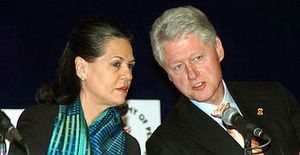

NEW DELHI (AP) -- Former President Clinton announced Thursday that two Indian pharmaceutical companies had agreed to cut the prices of HIV and AIDS treatment for children, making the lifesaving drugs far more accessible worldwide.
The companies will supply drugs for HIV-positive children at prices as low as 16 cents a day, or less than $60 a year, alllowing an additional 100,000 HIV-positive children in 62 countries to receive treatment in 2007, the foundation said.
''This is a great day, but we have a long way to go. We have to make a new commitment that every child and adult would needs treatment should have access'' to the drugs, Clinton said. ''Though the world has made progress in expanding HIV/AIDS treatment to adults, children have been left behind. Only one in 10 children who needs treatment is getting it.''
Clinton announced the deal in a speech at a New Delhi children's hospital at the launch of a new Indian government program to treat HIV-positive children. World AIDS Day is Friday.
Under the drug agreement, the two companies -- Cipla Ltd. and Ranbaxy Laboratories Ltd. -- will supply 19 different antiretroviral formulations for prices about 45 percent less than the lowest current rates for these drugs in developing countries.
Countries including France, Brazil, Chile, Norway and Britain will provide $35 million and the Clinton Foundation HIV/AIDS Initiative will contribute $15 million.
The drugs will be supplied to the governments of the countries where the children live, for distribution through public health and HIV/AIDS prevention programs.
Judge Blasts Bush for War on Katrina Victims
FEMA Told to Resume Storm Aid
Judge's Ruling May Affect Thousands On the Gulf Coast
By Spencer S. Hsu, Washington Post
The Bush administration unconstitutionally denied aid to tens of thousands of Gulf Coast residents displaced by hurricanes Katrina and Rita and must resume payments immediately, a federal judge ordered yesterday.
U.S. District Judge Richard J. Leon said the Federal Emergency Management Agency created a "Kafkaesque" process that began cutting off rental aid in February to victims of the 2005 storms, did not provide clear reasons for the denials, and hindered applicants' due-process rights to fix errors or appeal government mistakes.
"It is unfortunate, if not incredible, that FEMA and its counsel could not devise a sufficient notice system to spare these beleaguered evacuees the added burden of federal litigation to vindicate their constitutional rights," Leon, a D.C. federal judge, wrote in a 19-page opinion.
"Free these evacuees from the 'Kafkaesque' application process they have had to endure," he wrote.
Tuesday, November 28, 2006
How Bush Built a Civil War
President Bush sent U.S. soldiers into Afghanistan in October 2001 to capture or kill Osama bin Laden.
He failed to send U.S. troops after bin Laden at Tora Bora, allowing Afghan sympathizers to spirit the terrorist to safety in Pakistan, where he has been ensconced for the past five years. Bin Laden was responsible for the deaths of the 2,973 people who died in the September 11 attacks. Bush, in a brilliant stroke of legerdemain, persuaded Americans that capturing Osama, with whom his family had done business for decades, was no longer important. Saddam Hussein, who never attacked the United States, became the new bogeyman.
By whipping up a national frenzy for an unprovoked escapade in Iraq, the president bolstered his poll numbers and greatly helped Dick Cheney's Halliburton with $10 billion worth of contracts. He was not able, however, to bring peace and democracy to Iraq at the point of a gun. It did not help that his first action was to tell thousands of Iraqi men with weapons they were no longer wanted and cut off their income. By disbanding the army he set the stage for the civil war to follow.
If Americans thought the war would be over once U.S. soldiers marched into Baghdad and located those dangerous WMDs, they were sadly mistaken.
Bush's own chief arms inspector, David Kay, completely debunked the WMD myth last January. He reported there were no WMDs in Iraq, and probably hadn't been any for a decade.
Rather than declaring victory and withdrawing U.S. forces, Bush merely changed his rationale for the U.S. invastion and occupation. He said the U.S. would not leave until Iraqis had a constitution. Once that was achieved, warring factions went back to killing each other and U.S. soldiers. Bush changed his reason for keeping U.S. soldiers in Iraq one more time.
Despite growing opposition to the war among U.S. voters and our allies, the president continues to stick to an unattainable benchmark for withdrawing soldiers from Iraq's civil war: stability in a country with three armed sects who love killing each other.
One of Bush's main concerns now seems to be, not the safety of U.S. troops, but the increasing use by the media of the term civil war to describe the fighting in Iraq. Bush may be the last person on the planet who believes the fighting will be less nasty if you don't call it a civil war. He prefers to call it "sectarian violence."
"Anyone who still remains in doubt about whether this is civil war is suffering from the luxury of distance," CNN reporter Michael Ware reported Monday from Baghdad. Months ago, after the February 22 bombing of the holy Shiite mosque at Samarra, former Iraqi Prime Minister Ayad Allawai said “If this is not civil war, then God knows what civil war is."
RIGA, Latvia (AP) -- President Bush, under pressure to change direction in Iraq, said Tuesday he will not be persuaded by any calls to withdraw American troops before the country is stabilized.
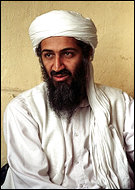
He failed to send U.S. troops after bin Laden at Tora Bora, allowing Afghan sympathizers to spirit the terrorist to safety in Pakistan, where he has been ensconced for the past five years. Bin Laden was responsible for the deaths of the 2,973 people who died in the September 11 attacks. Bush, in a brilliant stroke of legerdemain, persuaded Americans that capturing Osama, with whom his family had done business for decades, was no longer important. Saddam Hussein, who never attacked the United States, became the new bogeyman.
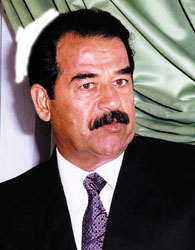
By whipping up a national frenzy for an unprovoked escapade in Iraq, the president bolstered his poll numbers and greatly helped Dick Cheney's Halliburton with $10 billion worth of contracts. He was not able, however, to bring peace and democracy to Iraq at the point of a gun. It did not help that his first action was to tell thousands of Iraqi men with weapons they were no longer wanted and cut off their income. By disbanding the army he set the stage for the civil war to follow.
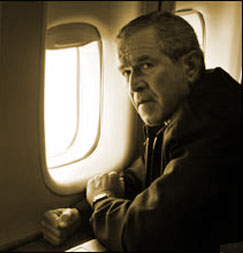
If Americans thought the war would be over once U.S. soldiers marched into Baghdad and located those dangerous WMDs, they were sadly mistaken.
Bush's own chief arms inspector, David Kay, completely debunked the WMD myth last January. He reported there were no WMDs in Iraq, and probably hadn't been any for a decade.
Rather than declaring victory and withdrawing U.S. forces, Bush merely changed his rationale for the U.S. invastion and occupation. He said the U.S. would not leave until Iraqis had a constitution. Once that was achieved, warring factions went back to killing each other and U.S. soldiers. Bush changed his reason for keeping U.S. soldiers in Iraq one more time.
Despite growing opposition to the war among U.S. voters and our allies, the president continues to stick to an unattainable benchmark for withdrawing soldiers from Iraq's civil war: stability in a country with three armed sects who love killing each other.
One of Bush's main concerns now seems to be, not the safety of U.S. troops, but the increasing use by the media of the term civil war to describe the fighting in Iraq. Bush may be the last person on the planet who believes the fighting will be less nasty if you don't call it a civil war. He prefers to call it "sectarian violence."
"Anyone who still remains in doubt about whether this is civil war is suffering from the luxury of distance," CNN reporter Michael Ware reported Monday from Baghdad. Months ago, after the February 22 bombing of the holy Shiite mosque at Samarra, former Iraqi Prime Minister Ayad Allawai said “If this is not civil war, then God knows what civil war is."
RIGA, Latvia (AP) -- President Bush, under pressure to change direction in Iraq, said Tuesday he will not be persuaded by any calls to withdraw American troops before the country is stabilized.
''There's one thing I'm not going to do, I'm not going to pull our troops off the battlefield before the mission is complete,'' he said in a speech setting the stage for high-stakes meetings with the Iraqi prime minister later this week. ''We can accept nothing less than victory for our children and our grandchildren.''
Friday, November 17, 2006
Iraq War Cost Skyrockets
Those with a good memory may recall that, just prior to launching the unprovoked war in Iraq, Bush officials estimated the conflict would cost approximate $60 billion. Some neocons even suggested that tapping into Iraq's oil revenue would make the war pay for itself. Now comes the hard, cold truth.
Military may ask $127B for wars
Total cost likely to top Vietnam War
By Richard Wolf, USA TODAY
WASHINGTON — The Bush administration is preparing its largest spending request yet for the wars in Iraq and Afghanistan, a proposal that could make the conflict the most expensive since World War II.
The Pentagon is considering $127 billion to $160 billion in requests from the armed services for the 2007 fiscal year, which began last month, several lawmakers and congressional staff members said. That's on top of $70 billion already approved for 2007.
Since 2001, Congress has approved $502 billion for the war on terror, roughly two-thirds for Iraq. The latest request, due to reach the incoming Democratic-controlled Congress next spring, would make the war on terror more expensive than the Vietnam War.
Sen. Kent Conrad, D-N.D., who will chair the Senate Budget Committee next year, said the amount under consideration is “$127 billion and rising.” He said the cost “is going to increasingly become an issue” because it could prevent Congress from addressing domestic priorities, such as expanding Medicare prescription drug coverage.
Rep. Jim Cooper, D-Tenn., who put the expected request at $160 billion, said such a sizable increase still “won't solve the problem” in Iraq.
Bill Hoagland, a senior budget adviser to Senate Republicans, said: “At a minimum, they were looking at $130 (billion). If it goes higher than that, I'm not surprised.”
The new request being considered for the war on terror would be about one-fourth what the government spends annually on Social Security — and 10 times what it spends on its space program.
Before the Iraq war began in 2003, the Bush administration estimated its cost at $50 billion to $60 billion, though White House economic adviser Lawrence Lindsey had suggested in 2002 that it could cost as much as $200 billion.
Growing opposition to the war contributed to Democrats' takeover of the House and Senate in this month's elections. Pennsylvania Rep. John Murtha, an early critic of the war who lost his bid Thursday to be the House Democratic leader, vowed to use his clout as chairman of the House panel that reviews the Pentagon budget “to get these troops out of Iraq and get back on track and quit spending $8 billion a month.”
Sunday, November 12, 2006
Bush Approval Plummets Again
President Bush’s job approval rating has fallen to just 31 percent, according to the latest Newsweek Poll.
Bill Clinton’s lowest rating during his presidency was 36 percent; Bush’s father’s was 29 percent, and Ronald Reagan’s was 35 percent. Jimmy Carter’s and Richard Nixon’s lows were 28 and 23 percent, respectively.
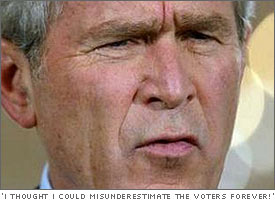
Bush can only pray that Democrats forgive him for maligning their patrotism and decide not to impeach him for lying to launch an unprovoked war in Iraq.
Most Americans are writing off the rest of Bush’s presidency; two-thirds (66 percent) believe he will be unable to get much done, up from 56 percent in a mid-October poll; only 32 percent believe he can be effective.
Presented with a list of factors that may have contributed to the Democrats’ success, 85 percent of Americans said the “major reason” was disapproval of the administration’s handling of the war in Iraq, 71 percent said disapproval of Bush’s overall job performance, 67 percent cited dissatisfaction with how Republicans have handled government spending and the deficit, 63 percent said disapproval of the overall performance of Republicans in Congress, 61 percent said Democrats’ ideas and proposals for changing course in Iraq.
Bill Clinton’s lowest rating during his presidency was 36 percent; Bush’s father’s was 29 percent, and Ronald Reagan’s was 35 percent. Jimmy Carter’s and Richard Nixon’s lows were 28 and 23 percent, respectively.
Most Americans are writing off the rest of Bush’s presidency; two-thirds (66 percent) believe he will be unable to get much done, up from 56 percent in a mid-October poll; only 32 percent believe he can be effective.
Presented with a list of factors that may have contributed to the Democrats’ success, 85 percent of Americans said the “major reason” was disapproval of the administration’s handling of the war in Iraq, 71 percent said disapproval of Bush’s overall job performance, 67 percent cited dissatisfaction with how Republicans have handled government spending and the deficit, 63 percent said disapproval of the overall performance of Republicans in Congress, 61 percent said Democrats’ ideas and proposals for changing course in Iraq.
Wednesday, November 08, 2006
Bush Replaces Rummy with Another Retread
After his spanking at the polls, President Bush announced that Defense Secretary Donald Rumsfeld would take the fall for the unprovoked war in Iraq.
He's being replaced by yet another retread from Bush Senior's administration. Robert Gates was Poppy's CIA Director for 14 months. Instead of choosing someone with military and intelligence experience who would have the support of both parties, Bush went to his father's Rolodex and pulled out a partisan mired in scandal and accused by colleagues of doctoring information to suit his former boss.
Gates was caught up in Iran-Contra. The Reagan scheme used money from arms sales to Iran (yes, Iran!) to illegally finance rebels in Nicaragua, in direct violation of a law passed by Congress. A special investigator looking into the scandal in 1987 found that there was insufficient evidence that Gates knew what was going on under then-CIA Director Bill Casey. Oliver North and John Poindexter were indicted for their roles in Iran-Contra.
Tuesday, November 07, 2006
Voters Slap Bush Upside the Head

George Bush finally made good on his pledge to be a uniter, not a divider. Tired of years of lies, hypocrisy, cronyism, bullying and corruption, voters went to the polls Tuesday, united in their determination to toss the rascal Republicans out of office.
In the biggest turnabout since the GOP took control of Congress in 1994 with a Contract On America, voters from red and blue states alike punished Republican incumbents for supporting President Bush's "Stay the Course" policy on the Iraq quagmire.
While the unprovoked war was uppermost on many voters' minds, they probably were also disgusted with tax cuts for the wealthy and corporations, which shifted more of the tax burden to middle class and working class wage-earners. Voters may also remember that Bill Clinton left office with a budget surplus, one that Bush quickly turned into the largest federal deficit in history.
The fact that Bush, for five years, slashed funds needed to strengthen levies in New Orleans, as part of his lame effort to pay down his tax cut and war deficit, probably didn't help. Nor did the abysmal federal response to Hurricane Katrina, which in large part was a result of Bush appointing incompetents to important posts, using the government as a patronage machine.
Monday, November 06, 2006
Bush Poison for GOP Candidates
Bush Snubbed in Florida
PENSACOLA, Fla. (AP) -- The closer the election came to the finish line, the more President Bush's aides battled the perception he was doing his party as much harm as good and was unwanted in many races.On Monday, Bush jetted to a conservative corner of Florida's Panhandle, about as far as he could get from the state's three in-play House districts. To the White House's embarrassment and irritation, Republican Charlie Crist, whom Bush came to help in his bid to succeed the president's brother as governor, decided at the last minute to skip the chance to be by the president's side.
Crist chief of staff George LeMieux said the conservative Pensacola area was so firmly in his camp that it made more sense to campaign elsewhere in the state. Said Crist, "I'm glad he's come to our state, but I've got to get around Florida."Still, Karl Rove, Bush's top political adviser, suggested that reporters see whether Crist would be able to hastily assemble anything like the Pensacola event, which drew about 7,000.
Bush ignored the dustup. "I strongly suggest you vote for Charlie Crist to be governor of the state of Florida," he said.
With Crist as a no-show, Bush was joined on stage by a host of Florida Republicans--but not by Republican Rep. Katherine Harris. She has run a much-panned Senate race that has had her Republican elders cringing and both the president and his brother keeping their distance.Saturday, November 04, 2006
Iraq Scoreboard and War Costs
U.S. death toll
2,942
WMDs
Zero
Bush Credibility
Zero
How Much Does the Iraq War Cost?
$2,000,000,000,000
By Linda Bilmes and Joseph E. Stiglitz
The Milken Institute Review
2,942
WMDs
Zero
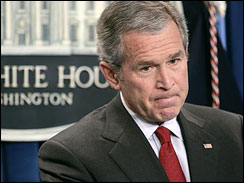
Bush Credibility
Zero
How Much Does the Iraq War Cost?
$2,000,000,000,000
By Linda Bilmes and Joseph E. Stiglitz
The Milken Institute Review
Two scholars, one a Nobel Prize winner, revisit their estimate of the true cost of the Iraq war - and find that $2 trillion was too low. They consider not only the current and future budgetary costs, but the economic impact of lives lost, jobs interrupted and oil prices driven higher by political uncertainty in the Middle East.
In January, we estimated that the true cost of the Iraq war could reach $2 trillion, a figure that seemed shockingly high. But since that time, the cost of the war - in both blood and money - has risen even faster than our projections anticipated. More than 2,500 American troops have died and close to 20,000 have been wounded since Operation Iraqi Freedom began. And the $2 trillion number - the sum of the current and future budgetary costs along with the economic impact of lives lost, jobs interrupted and oil prices driven higher by political uncertainty in the Middle East - now seems low.
One source of difficulty in getting an accurate picture of the direct cost of prosecuting the war is the way the government does its accounting. With "cash accounting," income and expenses are recorded when payments are actually made - for example, what you pay off on your credit card today - not the amount outstanding. By contrast, with "accrual accounting," income and expenses are recorded when the commitment is made. But, as Representative Jim Cooper, Democrat of Tennessee, notes, "The budget of the United States uses cash accounting, and only the tiniest businesses in America are even allowed to use cash accounting. Why? Because it gives you a very distorted picture."
The distortion is particularly acute in the case of the Iraq war. The cash costs of feeding, housing, transporting and equipping U.S. troops, paying for reconstruction costs, repairs and replacement parts and training Iraqi forces are just the tip of an enormous iceberg. Costs incurred, but not yet paid, dwarf what is being spent now - even when future anticipated outlays are converted back into 2006 dollars.
Congress has already appropriated approximately $430 billion for military operations, reconstruction and related programs in Iraq and Afghanistan. And these cash outlays have been rising as the war has progressed. In fiscal year 2003, the average monthly cost of operations was $4.4 billion, while today operations are running about $10 billion a month.Bush Lies, Endorses Rummy, Shoots GOP in Foot
Many GOP candidates running for re-election to Congress tried to show voters they were not toadies of President Bush by bashing Secretary of Defense Donald Rumsfeld on the failed invasion and occupation of Iraq, and in many cases calling for his ouster.
In the latest example of GOP implosion, Bush dealt those candidates an unexpected blow Thursday. He gave Rumsfeld the same glowing "Heck of a job, Brownie!" endorsement he gave to his now-parted FEMA chief Michael Brown by vowing to keep Rumsfeld through the bitter end of his presidency. "I'm pleased with the progress we're making," the president said.
In an odd turn of events, on the day after the elections Bush admitted he lied about keeping Rumsfeld on - that he had decided beforehand to can the defense secretary. The reason for his lie: to get him past a pesky reporter's question on the subject.
Recently, several top U.S. generals with experience in Iraq called for Rumsfeld's removal. Now the editorial writers of the military's newspapers are doing the same.

Army Times: 'Time for Rumsfeld to go'
(CNN) -- An editorial to be published in an independent military publication Monday calls for Defense Secretary Donald Rumsfeld to be replaced.
The editorial reads: "It is one thing for the majority of Americans to think Rumsfeld has failed. But when the nation's current military leaders start to break publicly with their defense secretary, then it is clear that he is losing control of the institution he ostensibly leads."
"Rumsfeld has lost credibility with the uniformed leadership, with the troops, with Congress and with the public at large," the editorial states. "His strategy has failed, and his ability to lead is compromised. And although the blame for our failures in Iraq rests with the secretary, it will be the troops who bear its brunt."
In the latest example of GOP implosion, Bush dealt those candidates an unexpected blow Thursday. He gave Rumsfeld the same glowing "Heck of a job, Brownie!" endorsement he gave to his now-parted FEMA chief Michael Brown by vowing to keep Rumsfeld through the bitter end of his presidency. "I'm pleased with the progress we're making," the president said.
In an odd turn of events, on the day after the elections Bush admitted he lied about keeping Rumsfeld on - that he had decided beforehand to can the defense secretary. The reason for his lie: to get him past a pesky reporter's question on the subject.
Recently, several top U.S. generals with experience in Iraq called for Rumsfeld's removal. Now the editorial writers of the military's newspapers are doing the same.

Army Times: 'Time for Rumsfeld to go'
(CNN) -- An editorial to be published in an independent military publication Monday calls for Defense Secretary Donald Rumsfeld to be replaced.
The editorial reads: "It is one thing for the majority of Americans to think Rumsfeld has failed. But when the nation's current military leaders start to break publicly with their defense secretary, then it is clear that he is losing control of the institution he ostensibly leads."
"Rumsfeld has lost credibility with the uniformed leadership, with the troops, with Congress and with the public at large," the editorial states. "His strategy has failed, and his ability to lead is compromised. And although the blame for our failures in Iraq rests with the secretary, it will be the troops who bear its brunt."
Thursday, November 02, 2006
Not-So-Angelic Evangelical
Key Evangelical Quits Amid Gay Sex Claim
COLORADO SPRINGS, Colo. (AP) -- The leader of the 30 million-member National Association of Evangelicals, a vocal opponent of same-sex marriage, resigned Thursday after being accused of paying for sex with a man in monthly trysts over the past three years.

The Rev. Ted Haggard, a married father of five who has been called one of the most influential evangelical Christians in the nation, denied the allegations. His accuser refused to share voice mails that he said backed up his claim.
Haggard also stepped aside as head of his 14,000-member New Life Church while a church panel investigates, saying he could "not continue to minister under the cloud created by the accusations."The allegations come as voters in Colorado and seven other states get ready to decide Tuesday on amendments banning gay marriage. Besides the proposed ban on the Colorado ballot, a separate measure would establish the legality of domestic partnerships providing same-sex couples with many of the rights of married couples.
Mike Jones, 49, of Denver said he decided to go public with his allegations because of the political fight. Jones, who said he is gay, said he was upset when he discovered Haggard and the New Life Church had publicly opposed same-sex marriage.
"It made me angry that here's someone preaching about gay marriage and going behind the scenes having gay sex," said Jones, who added that he isn't working for any political group.
Jones, whose allegations were first aired on KHOW-AM radio in Denver, claimed Haggard paid him to have sex nearly every month over three years. Jones also said Haggard snorted methamphetamine before their sexual encounters to heighten his experience.
Subscribe to:
Posts (Atom)